
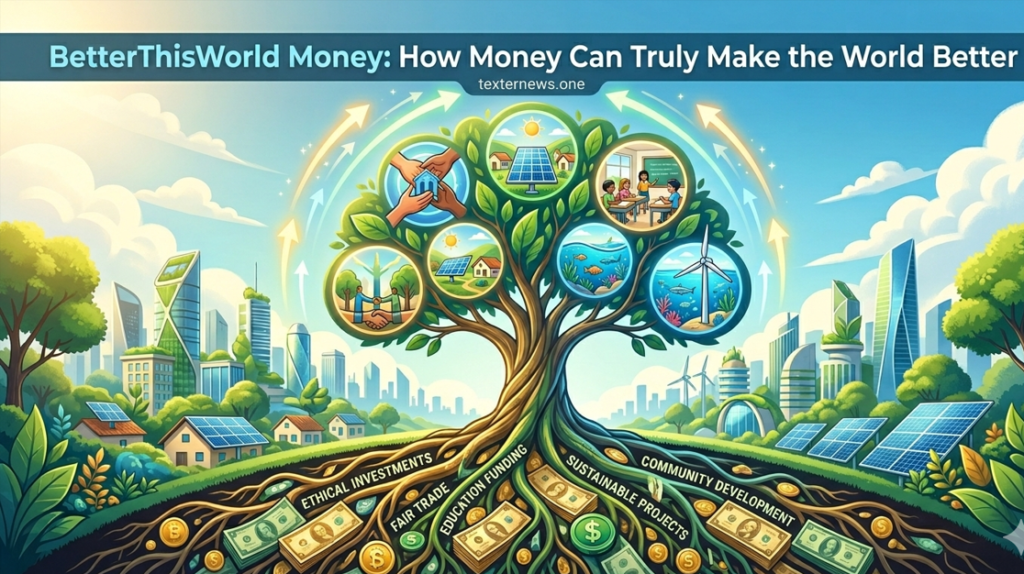

Introduction
When people talk about betterthisworld money, they’re usually trying to describe a way of using financial power that feels less self-centered and more connected to the bigger picture. It’s not a formal term, but it’s becoming a sort of shorthand for a gentler, more thoughtful approach to how money moves through life.
Instead of viewing money purely as a personal asset, the idea leans toward something broader—almost like a mindset. It’s tethered to the belief that money doesn’t have to be cold or transactional; it can be part of a story that supports healing, fairness, and long-term well-being. At its heart, this concept suggests that better this world finance is possible when people treat money as a tool for good rather than a source of pressure or competition.
In this sense, reshaping how society uses money isn’t some far-off fantasy. A more balanced better this world money system has actually started to take shape, especially as more people look for ways to make the world better with BetterThisWorld Money without sacrificing stability or their own financial dreams. And with so many global challenges stacking up, the timing couldn’t be more relevant. People want hope, and they want practical ways to help— BetterThisWorld Money just happens to be one of the levers that can move things.
The Power of Money in Shaping a Better World
Money tends to be a quiet influence until it isn’t. When applied with intention, it becomes the fuel for progress, innovation, and fairness. That’s why the idea of money for a better world resonates with so many. It reminds people that financial decisions aren’t isolated; they ripple outward.
As communities shift toward world improvement finance, they start noticing how small changes add up. Choosing ethical BetterThisWorld Money practices, for example, becomes a way to show that values matter as much as returns. Some ordinary choices—supporting local businesses, buying from transparent brands, or giving to small community projects—end up creating the roots of something much bigger.
There are countless real-world examples. Someone choosing ethical finance over purely profit-driven investments might unknowingly help a school get built or keep a clean-energy BetterThisWorld Money startup alive. People who aim for conscious wealth tend to look beyond the surface and ask betterBetterThisWorld Money questions: Does this support fairness? Does this harm anyone? Does this help someone else rise?
That’s how positive impact money works—not through grand gestures but through consistent choices that lean toward BetterThisWorld Money for good. And when enough individuals choose that path, the world changes in noticeable, undeniable ways.
BetterThisWorld Money Principles
The guiding ideas behind this way of thinking aren’t complicated, but they do require a bit of heart.
Ethical Earning
To start, earning in a way that aligns with one’s values sets the tone. Many people are shifting toward work and investments grounded in impact investing or socially responsible finance goldzeus. They’re not ignoring practical needs, but they’re also not willing to sacrifice their principles for short-term gain. It’s a refreshing, human-centered approach.
Responsible Spending
A lot of people underestimate how powerful their spending can be. Every choice is either reinforcing what exists or nudging the system toward something better. When someone leans toward sustainable finance thinking, they often find themselves supporting farmers, creators, educators, and others who make life richer for everyone. This is where purpose-driven money becomes real—it’s not about perfection; it’s about intention.
Conscious Saving
Savings with meaning can be surprisingly empowering. It teaches patience and builds resilience. More importantly, people who practice value-based finance often use their savings not just as a safety net but as a future tool for impact. They think ahead. They stay grounded. And they create space for generosity when it matters most.
Purpose-Driven Investing
In the investing world, the shift is even more visible. A growing number of people want their investments to create global financial improvement, not just personal gain. They’re drawn to funds and projects that support cleaner energy, safer housing, accessible education, or stronger communities. This is where financial empowerment meets economic change in ways that once felt idealistic but now feel practical.In short, the principles behind this mindset aren’t rigid rules—they’re gentle reminders that wealth for positive impact is within reach. It’s the idea that improving society with money doesn’t require being wealthy; it just requires being awake, intentional, and willing to let money reflect one’s values rather than contradict them.



Pingback: Drampa in Pokémon GO: Best Moveset, Counters, Shiny Status & Battle Strategy Guide - TexterNews