
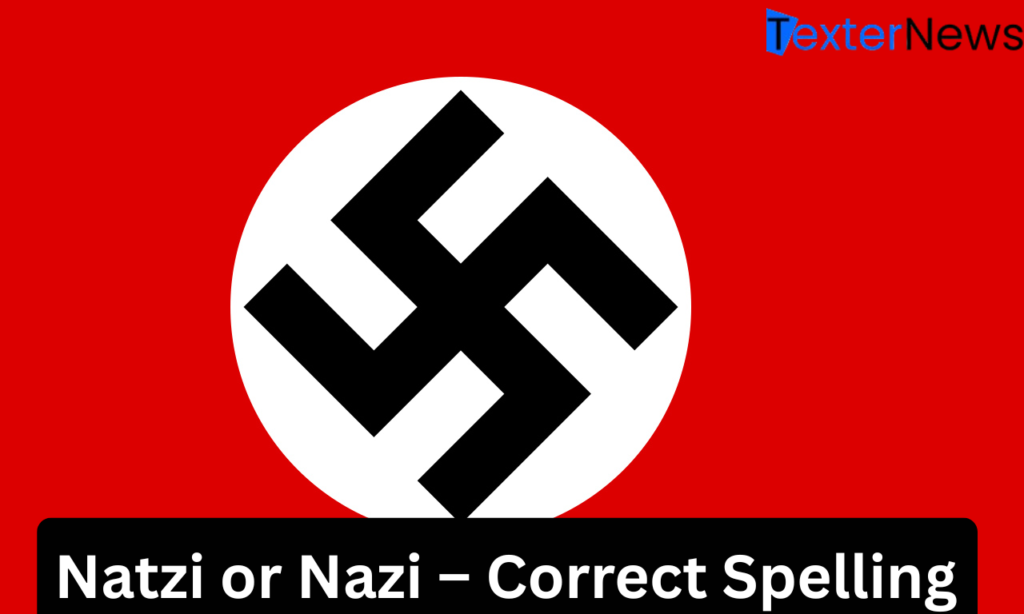

Some words carry enormous historical weight. They are not just terms in a dictionary; they represent events, ideologies, and real human suffering. The phrase “natzi or nazi” often appears in search bars, leaving many people unsure which version is correct and what the word truly means.
At first glance, it might look like a simple spelling issue. But behind that confusion sits a deeper question about history, language, and meaning. This article clears up the misunderstanding while also exploring the background, ideology, and historical impact connected to the word.
Is It “Natzi” or “Nazi”?
Clarifying the Correct Spelling
The correct spelling is Natzi or Nazi. The variation “Natzi or Nazi” is simply incorrect. There is no historical movement, political party, or recognized definition attached to the spelling with a “t.”
When people search difference between natzi and nazi, they are usually trying to confirm whether both words mean the same thing. The answer is straightforward: only “Nazi” is accurate.
The word itself comes from the German pronunciation of Nationalsozialist, meaning National Socialist. It became commonly associated with the Nazi Party, a political group that rose to power in the early 20th century.
Why “Natzi” Is a Common Misspelling
So why does “Natzi or Nazi” show up so often?
It usually comes down to phonetics. When spoken aloud, “Nazi” can sound like it contains a “t” in the middle. That small pronunciation shift leads to typing errors. For people unfamiliar with German spelling patterns, the confusion makes sense.
Another reason is simple human habit. When typing quickly, extra letters slip in. Over time, those small mistakes get repeated and start appearing in search suggestions.
This leads many to ask, is Natzi or Nazi a misspelling? Yes, it is. There is no alternate historical usage or accepted variation.
Search Intent Behind the Typo
When someone types “natzi or nazi,” they are usually looking for clarification. Sometimes they want the correct spelling. Other times, they are searching for the nazi meaning or a basic nazi definition.
Curiosity often drives the search. A student working on a history assignment might want to understand what does nazi mean. Someone reading about World War II could be checking details. Occasionally, people are simply verifying spelling before writing something themselves.
Behind the typo sits a broader interest in understanding the historical movement connected to the word.
Nazi Meaning and Historical Context
To understand the term properly, it helps to look at its background. The origin of the word nazi comes from Germany in the early 20th century. It was used as a shortened form of National Socialist, referring to members of the Nazi Party.
The party promoted an extreme form of national socialism ideology, blending nationalism, authoritarian leadership, and racial beliefs. Over time, the movement evolved into what became known as a german dictatorship under Adolf Hitler.
When discussing nazi germany, people are referring to the period when this political movement controlled the country. That era is also commonly called the third reich, a term used by the regime to describe its rule.
Who Was Adolf Hitler?
Many people searching who was adolf hitler are trying to connect the name with the broader movement.
Hitler was the leader of the Nazi Party and eventually became the head of state in Germany. His leadership transformed the political system into a totalitarian state.
Under his authority, the government operated as a fascist regime, controlling media, suppressing opposition, and enforcing strict ideological conformity. His influence shaped what many refer to when they ask for nazi ideology explained.
How Did the Nazi Party Rise to Power?
The question how did the nazi party rise to power often appears in search results alongside spelling questions. The answer lies in a mix of economic hardship, political instability, and public frustration in post–World War I Germany.
The party promised national revival, economic recovery, and strong leadership. Over time, it gained popularity through speeches, propaganda, and political maneuvering.
Once in power, the democratic system gradually disappeared. Political opponents were silenced, civil liberties were restricted, and the government centralized authority. The result was the authoritarian system associated with nazi germany.
Nazi Ideology Explained
At its core, national socialism ideology combined intense nationalism with racial theories and authoritarian rule. The belief system promoted the idea of national unity under a single leader while excluding and persecuting those deemed outsiders.
When people search for nazi ideology explained, they are usually trying to understand how such a system gained support. The answer is complex. It involved economic fears, propaganda, and appeals to national pride.
The regime described itself as building the third reich, presenting it as a restoration of German greatness. In reality, it created a deeply oppressive system recognized globally as a destructive fascist regime.
When Did Nazi Germany Fall?
Another common search is when did nazi germany fall. The regime ended in 1945, following defeat in World War II. With Germany’s surrender, the political structure built by the Natzi or Nazi party collapsed.
The fall marked the end of the dictatorship and the conclusion of a devastating chapter in global history.
Final Clarification: Natzi or Nazi?
Returning to the original question—natzi or nazi—the correct spelling is clear. “Nazi” is the accurate historical term. “Natzi or Nazi” is simply a typo.
Still, the fact that people search this phrase shows something meaningful. Language matters. Accuracy matters. And understanding the historical weight behind certain words matters even more.
By clarifying the spelling, readers often open the door to deeper questions about history, leadership, and ideology. And sometimes, a simple typo becomes the starting point for learning something far more significant.


Pingback: Zendaya and Tom Holland: A Modern Hollywood Love Story -
Pingback: What Is CBFW Meaning, Origins, and How to Use It Correctly This Trending Internet Term - TexterNews