
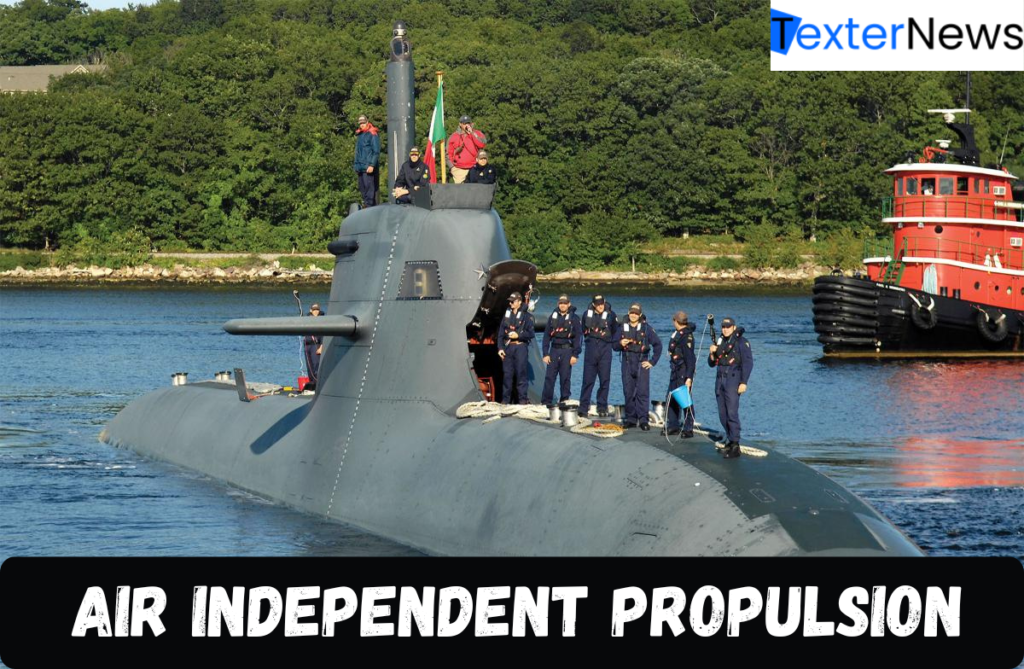

Introduction to Air Independent Propulsion
What is AIP?
Let’s talk about something that doesn’t get nearly enough attention outside naval circles. Air independent propulsion. Sounds technical, right? It is, but the concept is actually pretty straightforward once you break it down.
Air independent propulsion, often shortened to AIP systems, refers to technology that lets non-nuclear submarines operate without constantly coming up for air. Traditional diesel-electric subs? They need to surface or stick up a snorkel every day or two just to run their engines and recharge batteries. That’s a problem if you’re trying to stay hidden.
Think about it this way. A conventional sub running on battery power is quiet, but those batteries don’t last forever. Once they’re drained, the sub has to surface or get close enough to use that snorkel. And when that happens? It becomes visible to radar, vulnerable to detection. Not ideal when you’re trying to be sneaky.
Air-independent power changes the game entirely. With anaerobic propulsion, these vessels can stay submerged for weeks instead of days. We’re talking about a massive leap in capability.
The technology works by generating power without needing atmospheric oxygen. Different approaches exist, which we’ll get into shortly, but they all share the same basic goal. Keep the sub underwater longer. Keep it quieter. Keep it safer.
Closed-cycle propulsion isn’t exactly new, but it’s come a long way in recent decades. Navies around the world have invested heavily in submarine endurance extension because they recognize the strategic advantage. A sub that can loiter undetected for three weeks is way more useful than one that has to pop up every 36 hours.
Some folks lump this under the broader category of non-nuclear propulsion, which makes sense. It’s the middle ground between conventional diesel boats and full-on nuclear subs. Nuclear is powerful but expensive and politically complicated. Air independent power modules offer a more accessible option for countries that want serious underwater capability without building a nuclear fleet.
Why AIP Matters: The Stealth Advantage
Here’s where things get interesting. The stealth advantage isn’t just about staying down longer. It’s about what you can do with that time.
Extended submerged endurance means a submarine can position itself in hostile waters and just… wait. For days. Maybe weeks. Intelligence gathering, surveillance, watching enemy movements. All without revealing its position. That’s the kind of covert operations that win conflicts before they even start.
Compare that to older diesel-electrics. They’d have to expose themselves regularly, creating patterns that clever opponents could exploit. If you know a sub has to snorkel every 36 hours, you know where to look and when. AIP-equipped boats break that pattern entirely.
The acoustic signature difference matters too. Nuclear submarines are powerful, no question. But they’ve got coolant pumps running constantly, creating noise that sophisticated listening systems can pick up. Traditional diesel boats running on batteries are quiet, but they’re limited. AIP systems? They’re often even quieter than battery operation because the power generation is so smooth.
Stirling engines, fuel cells, closed-cycle diesels. Each technology has its own noise profile, but they all share one thing. They let the sub generate power while barely whispering.
There’s something else worth mentioning. The psychological factor. When enemy forces know there might be an AIP submarine somewhere in the area, and they know that sub could stay hidden for weeks, it changes how they operate. They have to assume they’re being watched. That uncertainty is itself a weapon. Air independent propulsion
Littoral warfare has become increasingly important over the past couple decades. Shallow waters near coastlines. Nuclear subs aren’t always ideal there. Too big, too noisy, too constrained. AIP boats, though? They’re perfect for the job. Sneak into coastal areas, run silent, observe, and if necessary, strike.
The technology isn’t perfect, and we’ll get into limitations later. But for many navies, air independent propulsion represents the sweet spot. Air independent propulsion Good enough endurance to be genuinely threatening. Quiet enough to stay hidden. Affordable enough to actually build in reasonable numbers.
How AIP Works: Core Technologies Explained
When people first start looking into air independent propulsion, they’re often surprised by how many different technical paths exist. It’s not one technology. It’s several competing approaches, each with strengths and weaknesses. Air independent propulsion
Some use heat engines. Some use electrochemical reactions. Some burn fuel, others convert it directly to electricity. The variety is honestly pretty fascinating.
What they all have in common is the ability to generate power without surfacing for air. Beyond that, the differences start to multiply.
Closed-Cycle Diesel Engines (CCD)
Let’s start with closed-cycle diesel, sometimes called CCD or closed cycle diesel. This approach takes a familiar technology and adapts it for underwater use.
Diesel engines are great. They’re reliable, well understood, and efficient. Problem is, they need air. Lots of it. The solution? Recirculate the exhaust.
Here’s how it works. The engine burns fuel normally, but instead of venting the exhaust overboard, the system captures it. That exhaust gets mixed with stored oxygen and sometimes a working gas like argon. Then it’s fed back into the engine intake. The cycle continues, with the engine running on its own processed exhaust plus fresh oxygen from onboard tanks.
Liquid oxygen tanks store the necessary LOX. Cryogenic storage vessels keep it cold enough to remain liquid. It’s heavy, it’s bulky, but it works.
The argon circulation diesel approach adds another layer. Argon is inert, which means it doesn’t participate in combustion. Instead, it helps regulate temperature and pressure in the closed loop. Some systems use it, some don’t.
Exhaust gas recirculation has been around for decades in various forms. Applying it to submarines took some clever engineering. The biggest challenge? Dealing with combustion byproducts. Air independent propulsion Diesel exhaust contains carbon dioxide, water vapor, and various other compounds. Before you can recirculate it, you have to scrub out the CO2 and manage the water. That’s where exhaust handling and CO2 scrubbing become critical.
LOX-fed diesel engines have been installed on a few submarine classes over the years. The technology works. It’s not the most efficient approach, but it’s robust and based on mature technology. Maintenance crews already understand diesel engines. That familiarity has value.
The main drawback is efficiency. The process of scrubbing exhaust and managing the closed loop consumes energy. You’re essentially using power to make power. Still, for extended submerged endurance, the tradeoff makes sense.
Modern applications of closed-cycle diesel tend to focus on smaller submarines or retrofit programs. It’s not the flashiest technology, but it gets the job done.
Stirling Cycle AIP
Now we get to something genuinely clever. The Stirling engine.
Unlike diesel engines that use internal combustion, Stirling engines are external combustion engines. Heat applied to the outside of the cylinder drives the piston inside. No explosions, no violent pressure spikes. Just smooth, quiet power.
The Stirling cycle AIP approach has proven incredibly successful, especially in certain submarine classes. Sweden’s Gotland-class submarine made it famous. Those boats can stay submerged for weeks, running their Stirling engines to generate power and recharge batteries while completely hidden.
Here’s how it works in practice. Liquid oxygen combustion provides the heat source. Diesel fuel burns with stored oxygen inside a combustion chamber. That heat transfers to the working gas inside the engine cylinder. The gas expands, pushes the piston, then moves to a cool area where it contracts. The cycle repeats, generating smooth rotational power.
The heat regeneration cycle is what makes Stirling engines efficient. A device called a regenerator captures heat from the expanding gas as it moves to the cool side, then returns that heat when the gas cycles back. It’s like recycling thermal energy instead of wasting it.
Stirling engines have some real advantages. They’re incredibly quiet. No explosive combustion means no sharp pressure spikes creating noise. The motion is smooth and continuous. For submarines, quiet operation is everything.
They’re also efficient. Not as efficient as fuel cells, maybe, but better than closed-cycle diesels. And they’re reliable. Fewer moving parts, less complexity, fewer things to break.
The Japanese really embraced this technology. Their Soryu-class submarines used Stirling engines for years before later boats switched to lithium-ion batteries. That’s actually an interesting trend. Some navies are now combining AIP with advanced battery systems to get the best of both worlds.
There’s a downside though. Stirling engines are big. The power density isn’t amazing compared to some alternatives. You need a certain amount of physical space to generate a given amount of power. Submarines don’t have space to waste.
Still, for many applications, the tradeoff works. Quiet operation, reasonable efficiency, proven reliability. That’s why Stirling remains one of the leading AIP technologies worldwide.
Fuel Cell AIP
This is the technology that gets people excited. Fuel cells.
If you’ve followed automotive technology at all, you’ve heard about hydrogen fuel cells. Cars that run on hydrogen, emit only water. Same basic concept applies here, just scaled up and adapted for submarine use.
Fuel cell AIP works through electrochemical conversion. Hydrogen and oxygen combine across a membrane, producing electricity, heat, and water. No combustion. No moving parts. Just direct electricity generation.
The most common type in submarine applications is PEM fuel cell. Proton exchange membrane, if you want the full name. These operate at relatively low temperatures, respond well to changing power demands, and pack decent power density.
Some systems use solid oxide fuel cells instead. Those run much hotter, which creates challenges for thermal management, but they’re more efficient and can use various fuels directly without extensive processing.
Hydrogen-oxygen power generation through fuel cells offers remarkable efficiency. We’re talking 50 to 70 percent conversion of fuel energy to electricity. Compare that to diesel engines at maybe 30 to 40 percent. The difference is substantial.
Storage is the tricky part. Hydrogen doesn’t like to be contained. It’s the smallest molecule in existence, which means it leaks through everything eventually. Submarines using fuel cells typically store hydrogen in metal hydride compounds. The hydrogen bonds chemically with metal alloys, releasing only when heated. It’s safe, compact, and works well underwater.
Liquid oxygen tanks provide the other reactant. Just like with other AIP technologies, the sub carries LOX in cryogenic storage vessels. The oxygen combines with hydrogen in the fuel cells, generating power and producing pure water as exhaust.
The water actually becomes useful. Submarines need fresh water for crew and systems. Fuel cells produce it continuously, reducing the need to make water through other means.
Germany led the way with fuel cell AIP. Their Type 212 and Type 214 submarines set the standard. These boats are incredibly quiet. No noisy engine moving parts. No combustion vibrations. Just silent electrochemical conversion.
The main challenge with fuel cells is cost and complexity. PEM fuel cells require platinum catalysts. Solid oxide cells need high-temperature materials and careful thermal management. Hydrogen storage systems add weight and volume.
But for extended submerged endurance, fuel cells are hard to beat. They’re efficient, quiet, and reliable. Many naval experts consider them the gold standard for modern AIP systems.
MESMA (Module d’Energie Sous-Marine Autonome)
France took a different path with their MESMA system. It’s a mouthful if you don’t speak French, but the concept is actually pretty straightforward.
MESMA stands for Module d’Energie Sous-Marine Autonome. Autonomous underwater power module, roughly translated. It’s a closed-cycle steam turbine system, and it works differently from the other technologies we’ve discussed.
Here’s the basic idea. You burn fuel with stored oxygen to create heat. That heat boils water into steam. The steam drives a turbine connected to a generator. Electricity flows to the sub’s systems and batteries. The steam then condenses back to water and repeats the cycle.
The ethanol-oxygen turbine approach uses ethanol as fuel. It burns cleanly with liquid oxygen, producing mostly CO2 and water vapor. Those combustion products get handled separately from the steam cycle.
MESMA systems operate independently from the submarine’s main propulsion. They’re essentially a separate power plant that runs when the sub needs to generate electricity without surfacing. Think of it as a highly specialized auxiliary power unit.
The French developed MESMA primarily for export customers. Countries that wanted AIP capability but preferred French submarine designs could add the MESMA module to boats like the Agosta 90B or Scorpene-class submarines.
The technology works fine. It’s not as efficient as fuel cells, and it’s not as quiet as Stirling engines. Steam turbines make noise. But it’s robust technology based on well-understood principles. Maintenance crews familiar with steam systems can handle it without extensive retraining.
One advantage of MESMA is power output. Steam turbines can generate significant power in a relatively compact package. For submarines needing higher electrical loads, that matters.
The main drawback is complexity. You’re essentially putting a miniature power plant inside the submarine. Boilers, turbines, condensers, pumps. Lots of moving parts, lots of potential failure points.
Still, for some navies, the tradeoff makes sense. Proven technology, reasonable performance, and integration with familiar French submarine designs.
Radioisotope Thermoelectric Generator (RTG)
This one’s different from everything else we’ve covered. Radioisotope thermoelectric generators don’t burn fuel. They don’t use chemical reactions. They harness the natural decay of radioactive materials.
An RTG works through the Seebeck effect. Certain materials generate voltage when one side is hot and the other is cold. Radioisotope decay provides the heat. The cold side is just the surrounding environment. Connect the two through thermoelectric materials, and you get electricity.
Nuclear battery is an informal term sometimes used for these devices. They’re not nuclear reactors. No fission, no chain reaction. Just natural decay producing steady heat over years or decades.
Radioisotope decay power has been used in space probes for decades. Voyager, Cassini, the Mars rovers. All ran on RTGs. The technology is proven and incredibly reliable.
For submarines, RTGs offer an interesting possibility. No moving parts. No fuel consumption. No exhaust. Just continuous, silent power for years. The ultimate Air independent propulsion power source, in some ways.
The catch? Safety and politics. Putting radioactive materials in a submarine that might get damaged in combat raises obvious concerns. There’s also the issue of waste disposal at end of life. And the international complications of nuclear materials, even in non-weapons form.
A few experimental submarine applications have explored RTG technology, but it’s never caught on widely. The combination of safety concerns, political hurdles, and limited power output keeps it niche.
Still, for specialized applications where extreme endurance matters more than power, radioisotope generators remain an option. Unmanned underwater vehicles, maybe. Surveillance platforms that need to sit on the seafloor for years. For those missions, the technology makes sense.
Submarine Classes & Platforms
Let’s talk about the actual submarines using these technologies. Names you’ll hear if you follow naval developments.
The German Type 212 and Type 214 submarines lead the pack for fuel cell technology. These boats are incredibly capable. They combine advanced hull design with proven PEM fuel cells for extended submerged endurance. The Italian Navy operates Type 212s too, by the way. Collaborative European project.
Sweden’s Gotland-class submarine made Stirling famous. These relatively small boats proved that AIP wasn’t just theoretical. They demonstrated real-world capability that impressed even the US Navy, which leased one for several years of exercises. The experience reportedly taught American crews some uncomfortable lessons about how quiet these boats can be.
Japan’s Soryu-class submarines originally used Stirling engines copied and improved from Swedish designs. Later boats in the class switched to lithium-ion batteries instead of AIP. That’s actually an interesting trend. Advanced batteries might eventually replace some AIP systems for certain applications. We’ll see how that plays out.
The Scorpene-class submarine, built by France’s Naval Group, offers MESMA as an option. Not every Scorpene buyer chooses it, but the capability exists. Chile, Malaysia, Brazil. Various navies operate these boats with different configurations.
Pakistan operates Agosta 90B submarines with MESMA installed. That caused some regional tension when they became operational. Neighbors suddenly had to account for submarines that could stay hidden much longer than previous models.
Russia’s Lada-class submarines were supposed to have advanced AIP systems. Development problems delayed things significantly. The latest word suggests they’re finally getting fuel cell technology operational, but Russia has struggled with this compared to Western European developers.
Israel’s Dolphin-class submarines, built by Germany, incorporate AIP technology. Given Israel’s strategic situation, having submarines that can loiter undetected for weeks matters enormously. These boats reportedly serve as a second-strike capability if things go badly.
South Korea’s KSS-III submarines represent that country’s growing naval ambition. These boats use fuel cell AIP technology, probably licensed from Germany. They’re large, capable, and designed for extended patrols in regional waters.
China’s 039A Yuan-class submarines reportedly use Stirling engines. Air independent propulsion The Chinese started with imported technology, reverse-engineered it, and now produce their own versions. Recent reports mention a 320 kilowatt Stirling engine that represents a significant advance. China’s submarine fleet is growing fast, Air independent propulsion and AIP plays a big role in that expansion.
Australia’s Collins-class submarine underwent AIP studies and potential upgrades. Ultimately, Air independent propulsion Australia chose a different path with nuclear submarines through the AUKUS agreement. But the Collins boats remain conventionally powered with possible AIP enhancements.
The upcoming A26 Blekinge-class submarine for Sweden will feature next-generation Stirling technology. Air independent propulsion Saab Kockums continues refining the concept, aiming for even better performance and quieter operation.
Components & Subsystems
Behind every AIP system lies an array of specialized components. Some are obvious. Some you’d never guess exist.
Liquid oxygen tanks are essential for almost every AIP technology. LOX is heavy, cold, and dangerous if mishandled. Storing it safely aboard a submarine requires cryogenic storage vessels with多层 insulation and careful monitoring. Pressure relief systems, vacuum jackets, temperature sensors. It’s complicated.
Hydrogen storage presents different challenges. For fuel cell boats, metal hydride tanks store hydrogen safely. The hydrogen bonds chemically with alloy powders, releasing only when heated. It’s heavier than compressed gas storage, but safer and more compact. No high-pressure tanks to rupture.
Some systems use reformers instead of stored hydrogen. Fuel processors extract hydrogen from liquid fuels like methanol or diesel. That approach avoids carrying pure hydrogen, which simplifies logistics. But reformers add complexity and consume energy. Tradeoffs everywhere.
Power electronics tie everything together. AIP systems generate electricity, but it’s not always in the right form for submarine systems. DC-DC converters adjust voltage levels. Inverters for AIP convert DC to AC when needed for certain equipment. Battery chargers manage the flow of power to storage.
Thermal management systems handle heat. Every power generation process creates waste heat. Fuel cells need cooling. Stirling engines need temperature control. Steam turbines need condensers. Pumps, heat exchangers, cooling loops. All of it packed into tight spaces.
Cryogenic storage vessels for LOX represent a whole specialized industry. Air independent propulsion Vacuum insulation, multiple layers of reflective shielding, careful pressure management. Lose the vacuum, lose the insulation, lose the oxygen. Bad day.
Auxiliary power units tie into the ship’s electrical distribution. The AIP system isn’t the main propulsion usually. It’s more like a generator that runs when the sub needs to recharge without surfacing. The APU feeds power to batteries and ship systems.
Exhaust handling and CO2 scrubbing matter for closed-cycle systems. Combustion creates waste products that must be removed. CO2 scrubbers use chemical absorbents. Water separators remove moisture. Exhaust handling systems direct processed gases either overboard or back into the cycle.
These components don’t get much attention in popular coverage, but they’re absolutely critical. AIP systems only work when every supporting subsystem functions perfectly.
Final Thoughts
Air independent propulsion has transformed what conventional submarines can do. The technology keeps getting better, too. Fuel cells improve. Stirling engines get more efficient. Batteries advance alongside AIP rather than replacing it entirely.
For navies that can’t afford nuclear submarines, AIP offers a compelling alternative. Extended submerged endurance, genuine stealth capability, and reasonable cost. That combination explains why so many countries have pursued this technology.
The future will probably bring hybrid approaches. AIP for long, quiet patrols. Advanced lithium-ion batteries for bursts of speed. Maybe even small nuclear reactors for the biggest boats. But for the next couple decades, air independent propulsion will remain central to submarine warfare.
Not bad for a technology that started as a clever solution to a simple problem. How do you keep a submarine underwater longer without building a nuclear reactor? Turns out there are multiple answers, each with its own strengths.
And that variety means different navies can choose what works for their specific needs. Geographic constraints, budget limitations, Air independent propulsion threat environments. All factor into which AIP technology makes sense.
The submarines themselves keep getting better. Quieter. Longer-enduring. More capable. And the people operating them? They get to do their jobs with less risk of detection, more time on station, greater confidence in their platform. Air independent propulsion
That’s what this technology ultimately enables. Air independent propulsion Submariners doing what submariners do, just better and longer and safer than before.



Pingback: Annunciation School Shooting: A Community's Darkest Day and Theirght for Light -
Pingback: Run the Gauntlet: Meaning, Origin, and Powerful Modern Usage Explained -