

Introduction
Walk into any concert band rehearsal, and you’ll see them lurking near the back of the woodwind section. They’re taller than the other clarinets, with a curved metal neck and a bell that points down like an elegant question mark. The bass clarinet doesn’t demand attention the way a flute might or announce itself like a trumpet. It just sits there, quietly, waiting for its moment.
And when that moment comes? Something magical happens.
That low, velvety tone rolls through the room like fog across a hillside. It’s warm without being mushy, powerful without being brash. If you’ve ever heard one and wondered what exactly you were listening to, you’re not alone. Plenty of people confuse the bass clarinet with a bassoon, or they assume it’s just a bigger version of the regular clarinet and leave it at that. But there’s so much more to this instrument than meets the eye.
This guide is for anyone curious about the bass clarinet—whether you’re a student just starting out, a parent trying to understand what your child is learning, or a musician from another instrument who keeps noticing that dark, mysterious sound and wants to know more. We’ll walk through everything from basic anatomy to buying your first instrument, with plenty of stops along the way to appreciate what makes this instrument so special.
Let’s get started.
What is a Bass Clarinet?
At its heart, the bass clarinet is a single-reed woodwind instrument. It belongs to the same family as the soprano clarinet that most people recognize, but it’s been scaled up and tweaked in some important ways.
Think of it this way: if a standard Bb clarinet is like a soprano singer, clear and bright, the bass clarinet is more like a baritone. It sings in a lower register, adding richness and weight to whatever music it’s playing. The instrument itself is substantial—usually around four feet long, though the tubing is bent and curved to make it manageable for a person to hold.
What Makes It Tick?
The range on a typical bass clarinet runs from low Eb up to high C, though you’ll find some models that extend down to a low C. That extra reach makes a difference in certain repertoire, giving players access to notes that rumble down deep where few other woodwinds can go.
Here’s where things get a little technical, but stick with me. The bass clarinet is what musicians call a transposing instrument in Bb. This means when a player reads and fingers a written C, the sound that comes out is actually a Bb. And it sounds an octave lower than the same written note on a soprano clarinet. This system might seem confusing at first, but it lets clarinet players switch between different sizes of instruments without having to learn completely new fingerings for every single note.
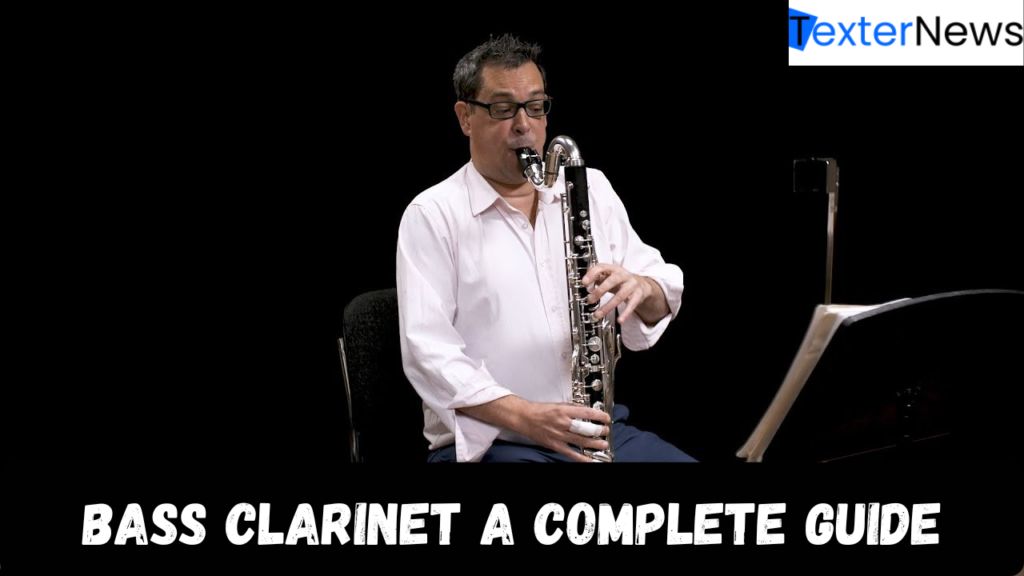
The anatomy of a bass clarinet follows a similar pattern to its smaller relatives, just stretched out and rearranged. Starting from the top, you’ve got the mouthpiece, which is larger than a standard clarinet mouthpiece and accepts bigger reeds. That attaches to a curved metal neck (sometimes called a crook) that brings the mouthpiece within comfortable reach of the player. Below that, the instrument splits into an upper joint and lower joint, though on some models these are combined. Finally, there’s the bell, which curves upward and then points down—that distinctive shape helps project the lowest notes out toward the audience.
Most players support the instrument with either a neck strap that hooks onto a ring on the upper joint or a floor peg that rests on the ground like a mini chair leg. The peg takes all the weight off the player, which is a nice feature during long rehearsals.
If you’re curious about just how big these instruments can get, check out our article “Bass Clarinet vs. Contrabass Clarinet: What’s the Difference?” for a look at the even larger members of the family.
Bass Clarinet vs. Soprano Clarinet
Let’s clear up something right away. When people search for “bass clarinet vs clarinet,” they’re usually comparing the bass to the standard Bb soprano instrument. And honestly, the differences run deeper than just size.
Size and Weight
Pick up a soprano clarinet, and it feels almost dainty. It rests comfortably on one hand, light enough to hold for hours without thinking about it. Now pick up a bass clarinet, and you immediately notice the difference. We’re talking several pounds of wood and metal. The keys are spread farther apart, the reach is longer, and without a neck strap or peg, you’d be fighting gravity the whole time you played.
This isn’t a complaint, mind you. That extra bulk contributes to the sound. More air moving through a longer column of air means more resonance, more depth, more of that dark chocolate tone that draws people to the instrument in the first place.
Mouthpiece and Reeds
Look at a bass clarinet mouthpiece next to a soprano mouthpiece, and the difference is obvious. That bigger mouthpiece needs bigger bass clarinet reeds to make it work. We’re not just talking slightly wider—these reeds are noticeably larger, cut from thicker cane, and designed to vibrate at lower frequencies.
Vandoren bass clarinet reeds are a popular choice among players, and for good reason. They’re consistent from box to box, responsive across the range of the instrument, and they hold up reasonably well if you take care of them. That said, reed choice is deeply personal. What works for one player might feel stiff and unresponsive to another. Part of the journey with this instrument is figuring out which cuts and strengths match your particular setup and embouchure.
Sound Production
This is where the bass clarinet really comes into its own. The soprano clarinet has that bright, agile sound that can cut through an orchestra or float delicately above a band. It’s a wonderful voice, versatile and expressive.
The bass clarinet, though? It speaks in darker tones. There’s a resonant quality to the lower register that feels almost vocal, like someone singing low in their chest. The middle register sings clearly without being shrill, and the altissimo—those really high notes—can be piercing or sweet depending on how you approach them.
Players often describe the bass clarinet sound as “woody” or “velvety,” and those descriptions fit. There’s a warmth here that you don’t quite get from other low woodwinds. It’s less buzzy than a bassoon, less reedy than an English horn, and somehow more grounded than either.
Fingerings
Good news for clarinet players: the basic bass clarinet fingerings are essentially the same as on soprano. If you know how to finger a C on your Bb clarinet, you know how to finger it on bass. The notes come out in a different octave, but the muscle memory transfers over.
That said, things get trickier in the altissimo register. The larger instrument responds differently up high, and some fingerings that work beautifully on soprano feel stuffy or out of tune on bass. Experienced players develop an expanded set of fingerings specifically for those upper reaches, often using alternate combinations that speak more cleanly on the bigger horn.
Role in the Ensemble
Listen to most band or orchestra music, and you’ll hear the soprano clarinets carrying melodies, weaving decorative lines, adding brightness to the woodwind choir. They’re front and center, doing the flashy work.
The bass clarinet in orchestra settings plays a different game. Sure, it gets melodic moments—Ravel’s Boléro features a long, sinuous bass clarinet solo that every player knows—but its primary job is often support. It fills out harmonies, doubles bass lines an octave above the string basses, adds color and depth to the overall sound.
In concert band, the role expands. The bass clarinet in concert band literature often gets more athletic parts, moving between supporting role and melodic voice as the music demands. It’s the bridge between the lower brass and the upper woodwinds, connecting those sections in ways that smooth out the overall texture.
The Bass Clarinet Through History and Across Genres
The bass clarinet hasn’t always enjoyed the spotlight, but when it steps forward, it leaves an impression.
In the Orchestra
Orchestral composers figured out pretty quickly that this instrument could do things nothing else could. Those low, shadowy lines in Tchaikovsky’s Nutcracker? Bass clarinet. The haunting solo that opens Act III of Wagner’s Tristan und Isolde? Also bass clarinet.
Serious students spend hours with bass clarinet orchestral excerpts, learning the standard passages that show up at auditions. These are the moments that define the instrument’s orchestral role—short but memorable solos that demand control, tone, and musical sensitivity.
Solo and Chamber Music
Here’s something that surprises people: there’s actually quite a bit of music written for bass clarinet as a solo instrument. Bass clarinet solo repertoire has grown tremendously over the past fifty years, with composers exploring all kinds of extended techniques and sonic possibilities.
Bass clarinet concertos exist too, though you won’t hear them on classical radio as often as the standard violin or piano concertos. Composers like Thea Musgrave and Joan Tower have written substantial works that showcase the instrument’s range and expressive capabilities.
For players working on fundamentals, bass clarinet etudes and methods provide essential material. Many players adapt the classic Rose etudes from soprano clarinet, and publishers offer editions specifically arranged for bass. These studies build technique while teaching musical phrasing that works well on the larger instrument.
Jazz and Beyond
If you know anything about bass clarinet jazz, you probably know the name Eric Dolphy. His playing on albums like Out to Lunch completely redefined what the instrument could do. He played with a vocal quality, sliding between notes, using overblown harmonics, treating the horn as an extension of his voice rather than a machine to be controlled.
Famous bass clarinet players in jazz also include Bennie Maupin, whose work on Miles Davis’s Bitches Brew brought the instrument into fusion, and contemporary players like Michael Lowenstern who continue pushing boundaries. Harry Sparnaay, though more associated with classical contemporary music, deserves mention here too—his work with extended techniques opened up possibilities that players across genres have explored.
In Film and Media
Listen closely to movie scores, and you’ll hear the bass clarinet everywhere. Bass clarinet in film scores often shows up in suspenseful moments, mystery scenes, or any time the director wants unease without going full horror-movie shriek. The instrument’s dark color fits those ambiguous emotional spaces perfectly.
Danny Elfman uses it extensively in his Batman scores. John Williams wrote memorable bass clarinet moments across his career. It’s one of those instruments that, once you start noticing it, you hear everywhere.
Choosing Your Bass Clarinet
So maybe you’re thinking about getting one of these for yourself. Or perhaps you’re helping a student find their first instrument. Either way, you’ve got decisions to make.
New or Used?
The market offers plenty of bass clarinet for sale at any given time, both new and used. New instruments come with warranties and the assurance that everything works correctly. Used instruments can save money, but they require careful inspection.
With used horns, check for pad condition—replacing pads is expensive. Look at the cork on the tenons; dry, cracked cork isn’t the end of the world, but it’s a negotiation point. If the instrument is wood, inspect carefully for cracks. Wood expands and contracts with humidity changes, and cracks in the joints can be serious problems.
Student Models
For beginners, student models make the most sense. These are typically made from plastic or resin rather than wood, which makes them more durable and less affected by weather changes. Yamaha, Selmer, and Buffet Crampon all make reliable student instruments that will get a player through several years of progress.
The trade-off with student horns is usually in the keywork and the low register. Many student models stop at low Eb rather than extending to low C, and the key mechanisms might feel less responsive than on professional instruments. That’s fine for learning. By the time those limitations start holding a player back, they’ll know enough to appreciate an upgrade.
Intermediate and Professional Models
Step up to intermediate or professional horns, and you’re looking at wood construction, better keywork, and almost always a low C extension. Brands like Selmer and Buffet Crampon dominate this space, with Buffet’s Prestige model being something of an industry standard among professionals.
The best bass clarinet brands have earned their reputations over decades. Selmer horns from the mid-20th century are still sought after. Buffet’s modern instruments offer excellent intonation and response. Yamaha continues refining their designs, producing horns that players genuinely enjoy.
What About the Contrabass?
Before we move on, let’s acknowledge the enormous relative. The contrabass clarinet is what happens when someone looks at a bass clarinet and thinks “that should be bigger.” It’s massive, standing nearly as tall as a person, and plays a full octave lower than the bass. Contrabass clarinets show up in clarinet choirs and contemporary music ensembles, and hearing one in person is an experience—that sound is so low you feel it in your chest.
Essential Gear and Accessories
A bass clarinet is just the beginning. To actually play it, you’ll need some supporting equipment.
Mouthpieces
The stock mouthpiece that comes with most student instruments is… fine. It works. But upgrading to a quality bass clarinet mouthpiece can transform how the instrument responds and sounds.
Players have strong opinions here. Some love the dark, focused sound of a Vandoren mouthpiece. Others prefer the free-blowing character of a Selmer. Custom makers like Grabner and Behn have passionate followings. If possible, try several mouthpieces with your instrument before buying—different combinations work better together than others.
Reeds
We mentioned bass clarinet reeds earlier, but they deserve another look. Reed choice affects everything—tone, response, endurance, intonation. Beginners typically start with softer reeds (strength 2 or 2.5) and move up as their embouchure develops.
Vandoren makes reeds specifically for bass clarinet, available in several cuts. The traditional blue box reeds offer consistent performance. The V12 cut uses a different taper that some players prefer for classical playing. Rico (now D’Addario) also makes reliable reeds that many students use successfully.
Ligatures and Caps
The bass clarinet ligature holds the reed to the mouthpiece. Simple concept, but design matters. Some ligatures use a single screw, others have two. Materials range from plated metal to fabric to leather. Different ligatures change how the reed vibrates, subtly affecting the sound.
The cap protects the reed when the instrument isn’t being played. Always use it—reeds are expensive, and chipping a tip because you didn’t bother with the cap is a frustrating way to waste money.
Maintenance Supplies
Bass clarinet cork grease seems trivial until you try to assemble an instrument with dry corks. A small tube lasts forever, and using it regularly prevents cracked tenons and stuck joints.
Swabs are essential too. Moisture collects inside the instrument while playing, and leaving it there invites problems. Run a swab through each section after playing, and store the instrument with the swab removed so air can circulate.
Care and Maintenance
Speaking of maintenance, let’s talk about keeping your instrument healthy.
Daily Care
After each practice session, swab out the moisture. This takes thirty seconds and prevents pads from deteriorating. Wipe down the outside too—fingerprints and moisture can eventually affect lacquer or finish.
Store the instrument in its case, preferably someplace with stable temperature and humidity. Leaving it in a hot car or near a heating vent invites cracks and regulation problems.
Regular Maintenance
Plan on annual service from a qualified repair technician. They’ll check pads for sealing, adjust key heights, oil the wood if needed, and catch small problems before they become big ones.
Bass clarinet repair requires someone who knows these instruments specifically. Not every band instrument repair person is comfortable working on bass clarinets—the mechanisms are more complex than on smaller horns, and adjustments require different approaches. Find a tech who knows their way around low clarinets and build a relationship with them.
Troubleshooting Common Issues
If notes won’t speak, check the obvious things first. Is the reed positioned correctly? Is the tenon cork sealing? Is there moisture trapped in a tone hole?
Sticky pads happen. Sometimes a quick wipe with a clean cloth solves it. If sticking persists, the pad may need replacement.
Squeaks usually point to embouchure issues or leaks. If you’re squeaking consistently in one register, have a teacher or experienced player listen—they can often identify whether it’s you or the instrument.
Learning the Instrument
For clarinet players, switching to bass isn’t starting from zero, but it’s not automatic either.
Getting Started
The embouchure needs adjustment. The mouthpiece angle is different, the jaw pressure changes, the air support requires more depth. Give yourself time to adapt.
Start with long tones in the lower register. Get comfortable just sustaining notes, feeling how the instrument responds. Then work on slurs between low and middle registers, smoothing out the transitions.
Finding Music
Beyond the standard etudes and methods, look for music you actually want to play. Transcribe jazz solos. Play along with recordings. Find duets to play with friends. The more you enjoy the music you’re making, the more you’ll practice, and the faster you’ll improve.
Connecting with Other Players
Bass clarinet players tend to find each other. Look for clarinet choirs in your area—these ensembles always need bass players. Attend workshops or masterclasses when they’re available. Online communities exist too, with players sharing tips, troubleshooting problems, and celebrating discoveries.
Frequently Asked Questions
Is the bass clarinet hard to play?
Harder than some instruments, easier than others. If you already play clarinet, you’re most of the way there. The main adjustments are air support (you need more of it) and embouchure (slightly looser than on soprano). Beginners who start on bass without prior clarinet experience face a learning curve, but plenty of players have done exactly that and become excellent.
How much does a bass clarinet cost?
Student models start around $1,500 to $2,500 used, $3,000 to $5,000 new. Intermediate instruments run $5,000 to $8,000. Professional horns can exceed $10,000, especially with premium features and wood quality. Rent-to-own programs exist through many music stores, which can make sense for students.
Can a clarinet player play bass clarinet?
Absolutely. The fingerings are essentially the same, and the musical skills transfer directly. The adjustment period varies—some players feel comfortable within weeks, others take months to really settle in. The important thing is giving yourself permission to sound like a beginner again for a little while.
What clef does bass clarinet read?
Treble clef, just like soprano clarinet. The instrument transposes, so the notes on the page don’t match the sounding pitches, but that’s how the whole clarinet family works. One less thing to learn.
Final Thoughts
The bass clarinet occupies a special place in the woodwind family. It’s not the flashiest instrument, not the one that young beginners typically dream about playing. But those who find their way to it often stay for life.
There’s something about that voice—dark, rich, capable of both growling power and haunting sweetness—that gets under your skin. Once you’ve felt a low C rumble through the floor and up through your feet, once you’ve floated a quiet melody in the altissimo register and watched it hang in the air like smoke, you understand why players love this instrument.
Whether you’re just starting to explore or你已经 played for years, the bass clarinet rewards the effort you put into it. It asks for good air support and patient practice, and in return, it gives you access to sounds you simply can’t make on anything else.
If you’re curious, find a way to try one. Sit down with a bass clarinet, put a reed on the mouthpiece, and see what happens when you blow. That first note might surprise you.
And if you’re already a player, keep exploring. There’s always more to discover—new repertoire, new techniques, new ways of shaping that dark, beautiful sound.